
私も描く
瀧口修造
私が最近「絵を描いている」ことについて何か書くようにと求められてから毎月のばしにしてきて、こんどはどうしても書かねばならぬ羽目になった。
ほんとうは、描くということは、私にとって書くことの何分の1かの代償になっているはずなのである。だから、自分が描くことについて何かまた自分で書かねばならぬということは、気の重くなることである。
もっとも、私がデッサンをはじめた動機のなかには、文字を書くことと同じところに置こうといったような暗黙の意図があり、これは私にはひとつの大きな課題なのであるから、デッサンをしているときの精神状態のメモのようなものをとって、それを私の「文章」のいとぐちにしたいと思っているのだが、そのノートはとかくブランクになりがちであるし(言葉が置き去りにされる)、まだ発表するような段階ではない。また発表すべき性質のものではないのかもしれない。こんなことを書くと、描いていることが何かだいそれたことのように思われるかもしれないが、そんなものではない。ともかくそういうわけで、私はここでは私のデッサンについて誰にもよく話すようなことを書いてみたい。
昨年の3月、私はふとスケッチブックを買ってきて机の上に置いた。
私はだいたい書くことが遅く、いつもブランクの原稿用紙が机の上にくるしそうに身をさらしていることが多い。そんなときに、このマス目のある紙と、スケッチブックの白紙との対照はいかにも印象的である。そのようなある日のこと、私のなかにくすぶっていた欲求のひとつが身をもたげてきたらしい。
文字ではない、しかし何かの形を表わそうというのでもない線、この同じ万年筆を動かしながら、ともかくも線をひきはじめた。最初はただの棒線であった。それから、どこか震えるような線、戸惑う線、くるしげにくびれ、はじける線、海岸線のように境界をつくろうとする線、つっぱしる線、甘えるような線、あてのない、いやはや他愛のない線、そんなものが幾冊かの帳面を埋めた。
そのうちに私は万年筆の青インクを墨インクにとりかえた。そしてやはり万年筆を捨てない。それはインクをとぎれさせないで書けるからである。書けると書いたが、そこではまだ実は書くと描くとの境が不明なのである。おそらくその不明さはどこまでもついてまわるだろう。しかし私は慣例にしたがって書くと描くとを、どこかで区別しなければならないし、区別させられるだろう。だが、それは後日の物語である。
青インクを墨インクにかえたといっても、このブルー・ブラックを捨てきれないでいる。そのブルー・ブラックは、ややもすると地獄の空のいろであり、妙に心をしずめる鎮静剤的ないろでもある。
線、線、線。こうして線を書いているうちに、奇妙なひと筆描きのような、自動的な線が突然現われはじめた。それはうねうねとくねりながら、空中にロープをまわすような具合に、上から下へと急降下する。このスピード遊びは私にスリルを感じさせる。それがどんな遊びなのかわからないが、そこにできるくびれた曲線の形が妙にエロティックな誘惑をもつ。そればかりではない、それはときに頭と胴体をもった人間のような格好を帯びたりする。
この線の遊びをくり返すが、やがて飽きられる。しかしこんな線形態が、私のどこにひそんでいたのかわからない。ひとつの書体のようにして、それからも忘れたときに顔を出す。
私はまた文字でもなく、絵でもない線の探検に耽る。とはいうものの、文字、象形文字への羨望が意外につよい。私は断続的な線によって、ある種の記号のようなものをほとんど無意識に書きはじめていることが多い。
ここで思いだしたことだが、こんなこころみをはじめる前に、私にはつぎのような経験がある。
数年前にジョルジュ・マチューが日本を訪れたとき、私はちょっとしたいたずらを思いついた。かれが羽田に着く前夜、私は原稿用紙に詩を書くように、マス目をひとつひとつ何かしら草書の文字めいた記号で埋めて、題だけ「ジョルジュ・マチューに贈る」とフランス語で書いておいた。かれがホテルに着いたとき、私はその原稿用紙を贈呈すると、かれは「有難う、あとで訳して下さい」といったので、私は何心なく「翻訳不可能です」といって別れたが、数日後にかれに会うと、「理解した」といって微笑していた。私は初対面の芸術家に対して決してふざけたわけではないが、記号とか「書」ということをいっている西洋の画家との最初の接触の機会に思いついたユーモラスな挨拶だったのである。
この無意識に走らせたペンの遊びがこんなふうに復活するとはまったく予想しなかったことである。それと、これとは別のことであるかもしれないが。
ところで私は墨インクのデッサンをくり返しているうちに、コップの水でそれをにじませることを覚えた。ブルー・ブラックのインクがまた返ってくる。ペンを拭うためのスポンジが毛筆の代用をつとめる。私はいまもまだ毛筆を使ったことがない。スポンジは一種の補助手段にすぎない。しかしこのにじみとか水気は線に空間をあたえてやるために必要である。いや、その水つけのために生気を帯びたり、死んだりする紙の上の動きに興味をもちはじめるのである。突然、それはあらぬところからファントムのように立ちはだかり、また急にしおれてしまう。あるいは無気力な操人形が急に活気づいて何事かをしゃべりだす。私はこうした小さな出来事を小さな紙の上で矢つぎ早に起しながら、写生帳の紙をめくってゆかねばならない。乾くのを待って、つぎの操作を加えることがもどかしい。そのために吸取紙を使う。この喉のかわいた紙は動いている魂までも吸いこんでしまうが、一挙にすべてを定着する魅力的な役割をしてくれる。それでこの吸取紙のために私は罠をしかけておかねばならないだろう。ともかく、このようにして私は紙をめくりながら描いてゆくので、必然的にシリーズのような形をとる。1枚のタブローに向うというよりも、日記のページを繰るように事をはこんでゆくのである。1ページのなかにも2つ、3つの、あるいは10以上のシリーズが現われることがある。それぞれ別のデッサンであるが、やはり連続し、関連がある。絵のコンポジションを無視しながらも、私はいつしか画家らしい所作に入っているのに気がついて苦笑する。書くと描くの限界が完全に混合してしまったようである。
私の頭のなかには、いわば他人の絵がいっぱいつまっている。私は美術評論家連盟の一員である。私がもし絵を描こうとすれば、どんな絵を描くだろう? こんな問いが私自身のなかにもないわけではない。しかしすくなくとも私がこんなことをはじめたそもそもの動機には、「絵を描いてみる」とか、まして画家になりたいとかいったことは寸分もなかった。もしそんな気持がすこしでもあれば、私は混乱して何もつづけられなかったにちがいない。私のこの文章のなかでも書くと描くという用語が不分明のまま使われていると思うのだが、もはや私はけっこう絵らしいものを描いているのだから、これを絵ではないなどという言い逃がれをしようとは思わない。しかし私はどこまでも動機を尊重したい。というよりも、私のデッサンにすこしでも取柄があるとすれば、動機だけだといえるようになりたいのである。デッサンの衝動が現われるとき、それを直接にとらえることが私には重要なのである。しかも私はそうした行動にできるだけ自由をあたえたい。ことに批評家というレッテルのために左右されまいとしている。私もすべての人間のようにデッサンする手をもっているという単純な事実をまず率直に確認したいと思う。もっとも、このような配慮は私がデッサンする場合に何も問題になっていないので、すべてあとからの付けたしである。
ところで私は昨年10月に「私の画帖から」という、小展覧会を催したのである。そしてはじめて「画帖」から数十枚を切り取って他人に手渡したのだが、展覧会というものにさらしてみてはじめて「描く」ということの別な意味がわかりかけてきた。この小さな紙きれに私というものがうずくまったり、蓮っ葉にはね返ったりしているではないか。そして同時に「批評家」という職名が私をぐいぐい押しつけてくる。私は押し返すが、こいつは堪らない! というところである。だが私はそんなものはすべて妄念であるとはねつけようとしている。この可憐な紙きれが世間に船出をする。あれらはリトマス試験紙のように青くなったり赤くなったりしているのではないか。
先日サム・フランシスは私の「作品」を見るなり「自画像!」といったものである。
この簡潔な評語。それは私自身よりもよくもなければ、わるくもないという意味にもとれるだろう。ぶ厚い絵画の壁が私の前にひしめいている。臆せず手を動かそう。前進しよう。行動の自由。ごく小さな行動でも「自由」が必要である。
*『藝術新潮』1961年5月号(新潮社)より再録
I also Draw (1961)
Shuzo Takiguchi
Recently I was asked to write something about the fact that I had started "drawing" and although I have been putting it off for months I now find myself in the position where it can be postponed no longer.
The fact is that for my part, drawing is actually supposed to act a substitute for a certain percentage of my writing so I find it very depressing when I am later asked to write something about it.
I must admit that when I first started drawing, it was my implicit intention to do so at the same level as when I write. This was an important theme for me and when I worked on my sketches, I made a point of noting my mental condition at the time. This was meant to provide me with hints for my "writing" but these notes were apt to remain blank (the words being omitted) and seldom achieved a degree of finish which would allow them to be published or alternatively they were not suitable for publication. Upon reading this, you may consider drawing a rather presumptuous activity, but it is not and that is why I will now try to write something about my sketches in a similar vein to that in which I discuss them with people.
In March of last year I happened to buy a sketchbook and placed it on my desk. I tend to be a slow writer and often find myself confronted with a pad of blank writing paper lying forlornly on my desk. At these times, I find the contrast between the lined writing paper and the blank sketch paper most striking and one day a desire that had long been smoldering within me raised its head.
Using my customary fountain pen, I began to draw lines, lines which were neither writing nor depicted any particular shape. At first these were simply straight lines then I progressed through slightly tremulous lines, confused lines, painfully constricted lines, jerky lines, lines that tried to demarcate like coastlines, dashing lines, coquettish lines, and aimless, nonsensical lines, managing to fill several books with them.
After a while, I abandoned blue ink for black Indian ink, but I did not forsake my fountain pen as this allowed me to draw extremely long lines without running out of ink. I say draw, but in actual fact, the lines I produced existed somewhere on the borderline between writing and drawing and I am unsure as to which verb I should use, this uncertainty doomed to hang over them forever. I know that I should be able to differentiate between writing and drawing according to conventional use of the words but that is a subject for an another day.
I mentioned that I replaced the blue ink with Indian ink, but the truth is that I am loathe to abandon blue-black altogether. Blue-black can be described as being the color of the sky in Hell and I find it has a strangely tranquilizing effect on the mind.
Lines, lines, lines... drawing all these lines in this way I discover strange, continuous, almost automatic lines suddenly begin to make an appearance on the paper. Meandering, serpentine lines, like a rope being twisted in the air, they quickly descend the page. The speed of this game fills me with a thrill of excitement. I do not know exactly what sort of game it is, but the resulting constricted lines possess a power of almost sexual seduction. What is more, the lines appear to take on human form with a head and body.
I repeat this line game, until eventually I tire of it. I do not know from where within me this structure of lines comes. It forms a distinct calligraphic style that emerges when I least expect it. I abandon myself to the exploration of these lines that are neither writing nor drawing, although I must admit I have a remarkably strong fascination with written characters, particularly ideograms and frequently catch myself beginning to write a certain type symbol almost without being aware of what I am doing.
Writing this has reminded me of an experience I had before I took up this kind of experimentation. Several years ago the painter, Georges Mathieu, visited Japan and the night before he was due to arrive at Haneda airport, I took a sheet of writing paper and filled the page with random marks resembling cursive script, as if I were writing a poem, and then for a title I wrote in French "A Present for Georges Mathieu." When he arrived at his hotel, I presented him with the paper. He thanked me for the gift and asked me to translate it for him later. I replied without thinking, saying that it was impossible to translate and a few days later when I met him again, he smiled, saying simply; "I understand." It was the first time I had met him and I did not intend this merely as a prank, rather I felt it would be an appropriate greeting for a western artist who likes to describe his work as being both symbolic and calligraphic.
I never dreamed that this unconscious method of ink drawing would later reincarnate itself as it has, although I suppose it is quite possible that this early example was quite unconnected to what I do now.
While I was making repeated sketches in Indian ink, I discovered how to use water in a glass to blur the lines and by so doing was able to turn the Indian ink back to blue-black again. I use the sponge that I keep to wipe my pen in place of a brush and I have yet to use a brush in any of my pictures. This sponging is merely a supplementary technique but the gradation that can be achieved this way is indispensable to attain a feeling of depth in the lines. No, I would go as far to say that although the surface of the paper may appear either lively or dead, it is imbued with movement and interest for the first time through the addition of water. Suddenly, something will appear like a phantom in the most unexpected place before abruptly withering away. At other times it is like a lifeless puppet that suddenly comes to life and begins to speak. While I am causing all these rapid changes within the confines of the sheet of paper, I often feel a need to flick through the pages of my sketch book. I do not have the patience to wait for the ink to dry before moving on to the next page so I use blotting paper instead. In its thirst, the blotting paper consumes the spirit of the picture while it is still writhing on the paper, but at the same time it plays the attractive role of fixing the entire image in one fell swoop. For this reason I like to prepare bait for the blotting paper to take.
Anyway, as I keep turning the pages and creating new sketches in this way, the results inevitably end up taking on the form of series. Rather than work on a single tableau, I carry on working in sequence, as if turning the pages of a diary. Two, three, even ten or more series may appear on a single page. They are all independent sketches, but interconnected to form a series. Despite having no time for ideas of composition, I realize, with a bitter laugh that in some respects there is something of the artist within me. It would appear that the confines of writing and drawing have become hopelessly mixed.
I am a member of the Art Critics Federation and so my mind is filled with other people’s paintings. If I were to paint a picture, I wonder what kind of work it would be. This is a question that exists within me but I must stress that when I started my sketches I had absolutely no intention of wanting to paint a picture or to become an artist. If this had been what I wanted, I am sure that I would have become confused and unable to continue anything. I realize that in this essay I have failed to differentiate fully between the words “write” and “draw,” particularly as recently a lot of my pictures can be said to be quite artistic and it is silly for me to make excuses or pretend that I do not draw, but I like to try to adhere to my original motives. In fact it could even be said that if there is any merit at all to be found in my sketches, it exists only in this motivation. When I feel the impulse to sketch, I believe it is important that I capture it directly. What is more, I like to give this impulse as much freedom as possible. In particular, I try not to allow myself to be influenced by the fact that I am considered an art critic. My first thought is to confirm to myself the simple fact that I, like the rest of mankind, possess a hand capable of creating sketches. I must admit, however, that none of these considerations cause me any worry when I am actually sketching, they are merely something that are applied afterwards.
In October of last year, I held a small exhibition entitled, From My Sketchbooks. For the first time I removed several dozen pictures from my sketchbook and passed them to somebody else and as a result of exposing myself through the medium of an exhibition in this way, I discovered another meaning of "drawing." It occurred to me that I myself was contained within those small scraps of paper, that I could be seen crouching there or romping around in a wanton manner. At the same time, my position as a "critic" became a terrible weight that seemed to press down upon me, causing me to try and push it away, it was unbearable!
However, I eventually managed to cast all such thoughts aside as being irrelevant. The tiny pieces of paper were being launched into the world and I decided to watch and see if they would turn blue or red like litmus paper.
Recently Sam Francis saw one of my "works" and declared it to be a "self-portrait!" It was a most succinct review and I like to believe that it means the work is neither better nor worse than I am myself. Faced with a thick wall of paintings, I do not flinch and my hand continues to work. I try to progress. It represents freedom of action, no matter how small and, freedom is always necessary.
*Originally published in "Geijutsu Shincho", Shincho-sha, May 1961
Translated by Gavin FREW
*画廊亭主敬白
ときの忘れものの今回の企画は造形作家としての瀧口修造にご注目いただきたいというのが動機であり、目的です。
1月、3月、そして12月の三回にわけて瀧口作品を展示しますが、実物をご覧になれば、瀧口修造が余技や手すさびではなく本格的に造形に取り組み、その画面には「描く喜び」が満ち溢れていることにお気づきになるのではないでしょうか。
ご遺族のお許しを得て、瀧口修造が生前書いた二つの文章「私も描く」「手が先き、先きが手」を初出誌から再録し、さらに英訳も掲載いたしました。国際的な広がりと評価を確信するからに他なりません。
それにしても「私も描く」とはなんといさぎよい言葉でしょう。
■ときの忘れものは2014年3月12日[水]―3月29日[土]「瀧口修造展 II」開催しています(※会期中無休)。
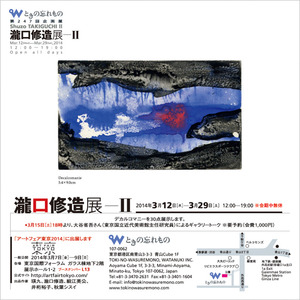
今回は「瀧口修造展 Ⅰ」では展示しなかったデカルコマニー30点をご覧いただきます。
●出品作品を順次ご紹介します。
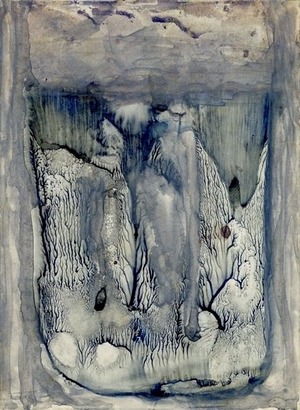 瀧口修造
瀧口修造
《Ⅱ-5》
デカルコマニー、紙
※Ⅱ-4と対
Image size: 13.6x9.9cm
Sheet size: 13.6x9.9cm
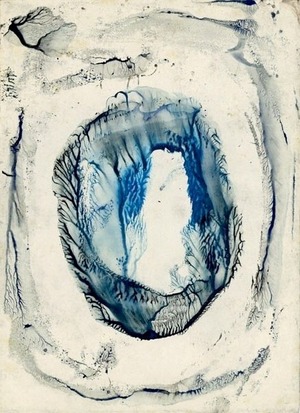 瀧口修造
瀧口修造
《Ⅱ-5(裏)》
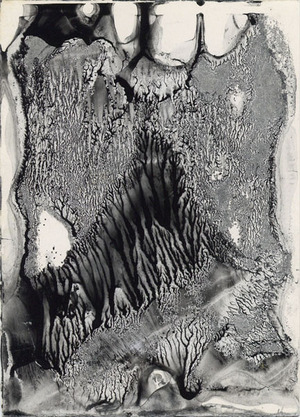 瀧口修造
瀧口修造
《Ⅱ-6》
デカルコマニー、紙
Image size: 13.8x9.9cm
Sheet size: 13.8x9.9cm
こちらの作品の見積り請求、在庫確認はこちらから
このブログでは関係する記事やテキストを「瀧口修造の世界」として紹介します。土渕信彦のエッセイ「瀧口修造の箱舟」と合わせてお読みください。
●カタログのご案内
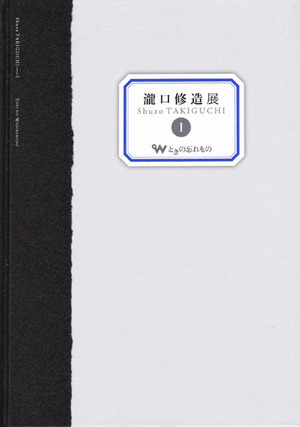 『瀧口修造展 I』図録
2013年
ときの忘れもの 発行
図版:44点
英文併記
21.5x15.2cm
ハードカバー
76ページ
執筆:土渕信彦「瀧口修造―人と作品」
再録:瀧口修造「私も描く」「手が先き、先きが手」
価格:2,100円(税込)
※送料別途250円(お申し込みはコチラへ)
------------------------------------------
●本日のウォーホル語録
「人々は目を閉じたまま愛し合うべきだ。目を閉じて、見ないで……。
―アンディ・ウォーホル」
ときの忘れものでは4月19日~5月6日の会期で「わが友ウォーホル」展を開催しますが、それに向けて、1988年に全国を巡回した『ポップ・アートの神話 アンディ・ウォーホル展』図録から“ウォーホル語録”をご紹介して行きます。
こちらの作品の見積り請求、在庫確認はこちらから
瀧口修造
私が最近「絵を描いている」ことについて何か書くようにと求められてから毎月のばしにしてきて、こんどはどうしても書かねばならぬ羽目になった。
ほんとうは、描くということは、私にとって書くことの何分の1かの代償になっているはずなのである。だから、自分が描くことについて何かまた自分で書かねばならぬということは、気の重くなることである。
もっとも、私がデッサンをはじめた動機のなかには、文字を書くことと同じところに置こうといったような暗黙の意図があり、これは私にはひとつの大きな課題なのであるから、デッサンをしているときの精神状態のメモのようなものをとって、それを私の「文章」のいとぐちにしたいと思っているのだが、そのノートはとかくブランクになりがちであるし(言葉が置き去りにされる)、まだ発表するような段階ではない。また発表すべき性質のものではないのかもしれない。こんなことを書くと、描いていることが何かだいそれたことのように思われるかもしれないが、そんなものではない。ともかくそういうわけで、私はここでは私のデッサンについて誰にもよく話すようなことを書いてみたい。
昨年の3月、私はふとスケッチブックを買ってきて机の上に置いた。
私はだいたい書くことが遅く、いつもブランクの原稿用紙が机の上にくるしそうに身をさらしていることが多い。そんなときに、このマス目のある紙と、スケッチブックの白紙との対照はいかにも印象的である。そのようなある日のこと、私のなかにくすぶっていた欲求のひとつが身をもたげてきたらしい。
文字ではない、しかし何かの形を表わそうというのでもない線、この同じ万年筆を動かしながら、ともかくも線をひきはじめた。最初はただの棒線であった。それから、どこか震えるような線、戸惑う線、くるしげにくびれ、はじける線、海岸線のように境界をつくろうとする線、つっぱしる線、甘えるような線、あてのない、いやはや他愛のない線、そんなものが幾冊かの帳面を埋めた。
そのうちに私は万年筆の青インクを墨インクにとりかえた。そしてやはり万年筆を捨てない。それはインクをとぎれさせないで書けるからである。書けると書いたが、そこではまだ実は書くと描くとの境が不明なのである。おそらくその不明さはどこまでもついてまわるだろう。しかし私は慣例にしたがって書くと描くとを、どこかで区別しなければならないし、区別させられるだろう。だが、それは後日の物語である。
青インクを墨インクにかえたといっても、このブルー・ブラックを捨てきれないでいる。そのブルー・ブラックは、ややもすると地獄の空のいろであり、妙に心をしずめる鎮静剤的ないろでもある。
線、線、線。こうして線を書いているうちに、奇妙なひと筆描きのような、自動的な線が突然現われはじめた。それはうねうねとくねりながら、空中にロープをまわすような具合に、上から下へと急降下する。このスピード遊びは私にスリルを感じさせる。それがどんな遊びなのかわからないが、そこにできるくびれた曲線の形が妙にエロティックな誘惑をもつ。そればかりではない、それはときに頭と胴体をもった人間のような格好を帯びたりする。
この線の遊びをくり返すが、やがて飽きられる。しかしこんな線形態が、私のどこにひそんでいたのかわからない。ひとつの書体のようにして、それからも忘れたときに顔を出す。
私はまた文字でもなく、絵でもない線の探検に耽る。とはいうものの、文字、象形文字への羨望が意外につよい。私は断続的な線によって、ある種の記号のようなものをほとんど無意識に書きはじめていることが多い。
ここで思いだしたことだが、こんなこころみをはじめる前に、私にはつぎのような経験がある。
数年前にジョルジュ・マチューが日本を訪れたとき、私はちょっとしたいたずらを思いついた。かれが羽田に着く前夜、私は原稿用紙に詩を書くように、マス目をひとつひとつ何かしら草書の文字めいた記号で埋めて、題だけ「ジョルジュ・マチューに贈る」とフランス語で書いておいた。かれがホテルに着いたとき、私はその原稿用紙を贈呈すると、かれは「有難う、あとで訳して下さい」といったので、私は何心なく「翻訳不可能です」といって別れたが、数日後にかれに会うと、「理解した」といって微笑していた。私は初対面の芸術家に対して決してふざけたわけではないが、記号とか「書」ということをいっている西洋の画家との最初の接触の機会に思いついたユーモラスな挨拶だったのである。
この無意識に走らせたペンの遊びがこんなふうに復活するとはまったく予想しなかったことである。それと、これとは別のことであるかもしれないが。
ところで私は墨インクのデッサンをくり返しているうちに、コップの水でそれをにじませることを覚えた。ブルー・ブラックのインクがまた返ってくる。ペンを拭うためのスポンジが毛筆の代用をつとめる。私はいまもまだ毛筆を使ったことがない。スポンジは一種の補助手段にすぎない。しかしこのにじみとか水気は線に空間をあたえてやるために必要である。いや、その水つけのために生気を帯びたり、死んだりする紙の上の動きに興味をもちはじめるのである。突然、それはあらぬところからファントムのように立ちはだかり、また急にしおれてしまう。あるいは無気力な操人形が急に活気づいて何事かをしゃべりだす。私はこうした小さな出来事を小さな紙の上で矢つぎ早に起しながら、写生帳の紙をめくってゆかねばならない。乾くのを待って、つぎの操作を加えることがもどかしい。そのために吸取紙を使う。この喉のかわいた紙は動いている魂までも吸いこんでしまうが、一挙にすべてを定着する魅力的な役割をしてくれる。それでこの吸取紙のために私は罠をしかけておかねばならないだろう。ともかく、このようにして私は紙をめくりながら描いてゆくので、必然的にシリーズのような形をとる。1枚のタブローに向うというよりも、日記のページを繰るように事をはこんでゆくのである。1ページのなかにも2つ、3つの、あるいは10以上のシリーズが現われることがある。それぞれ別のデッサンであるが、やはり連続し、関連がある。絵のコンポジションを無視しながらも、私はいつしか画家らしい所作に入っているのに気がついて苦笑する。書くと描くの限界が完全に混合してしまったようである。
私の頭のなかには、いわば他人の絵がいっぱいつまっている。私は美術評論家連盟の一員である。私がもし絵を描こうとすれば、どんな絵を描くだろう? こんな問いが私自身のなかにもないわけではない。しかしすくなくとも私がこんなことをはじめたそもそもの動機には、「絵を描いてみる」とか、まして画家になりたいとかいったことは寸分もなかった。もしそんな気持がすこしでもあれば、私は混乱して何もつづけられなかったにちがいない。私のこの文章のなかでも書くと描くという用語が不分明のまま使われていると思うのだが、もはや私はけっこう絵らしいものを描いているのだから、これを絵ではないなどという言い逃がれをしようとは思わない。しかし私はどこまでも動機を尊重したい。というよりも、私のデッサンにすこしでも取柄があるとすれば、動機だけだといえるようになりたいのである。デッサンの衝動が現われるとき、それを直接にとらえることが私には重要なのである。しかも私はそうした行動にできるだけ自由をあたえたい。ことに批評家というレッテルのために左右されまいとしている。私もすべての人間のようにデッサンする手をもっているという単純な事実をまず率直に確認したいと思う。もっとも、このような配慮は私がデッサンする場合に何も問題になっていないので、すべてあとからの付けたしである。
ところで私は昨年10月に「私の画帖から」という、小展覧会を催したのである。そしてはじめて「画帖」から数十枚を切り取って他人に手渡したのだが、展覧会というものにさらしてみてはじめて「描く」ということの別な意味がわかりかけてきた。この小さな紙きれに私というものがうずくまったり、蓮っ葉にはね返ったりしているではないか。そして同時に「批評家」という職名が私をぐいぐい押しつけてくる。私は押し返すが、こいつは堪らない! というところである。だが私はそんなものはすべて妄念であるとはねつけようとしている。この可憐な紙きれが世間に船出をする。あれらはリトマス試験紙のように青くなったり赤くなったりしているのではないか。
先日サム・フランシスは私の「作品」を見るなり「自画像!」といったものである。
この簡潔な評語。それは私自身よりもよくもなければ、わるくもないという意味にもとれるだろう。ぶ厚い絵画の壁が私の前にひしめいている。臆せず手を動かそう。前進しよう。行動の自由。ごく小さな行動でも「自由」が必要である。
*『藝術新潮』1961年5月号(新潮社)より再録
I also Draw (1961)
Shuzo Takiguchi
Recently I was asked to write something about the fact that I had started "drawing" and although I have been putting it off for months I now find myself in the position where it can be postponed no longer.
The fact is that for my part, drawing is actually supposed to act a substitute for a certain percentage of my writing so I find it very depressing when I am later asked to write something about it.
I must admit that when I first started drawing, it was my implicit intention to do so at the same level as when I write. This was an important theme for me and when I worked on my sketches, I made a point of noting my mental condition at the time. This was meant to provide me with hints for my "writing" but these notes were apt to remain blank (the words being omitted) and seldom achieved a degree of finish which would allow them to be published or alternatively they were not suitable for publication. Upon reading this, you may consider drawing a rather presumptuous activity, but it is not and that is why I will now try to write something about my sketches in a similar vein to that in which I discuss them with people.
In March of last year I happened to buy a sketchbook and placed it on my desk. I tend to be a slow writer and often find myself confronted with a pad of blank writing paper lying forlornly on my desk. At these times, I find the contrast between the lined writing paper and the blank sketch paper most striking and one day a desire that had long been smoldering within me raised its head.
Using my customary fountain pen, I began to draw lines, lines which were neither writing nor depicted any particular shape. At first these were simply straight lines then I progressed through slightly tremulous lines, confused lines, painfully constricted lines, jerky lines, lines that tried to demarcate like coastlines, dashing lines, coquettish lines, and aimless, nonsensical lines, managing to fill several books with them.
After a while, I abandoned blue ink for black Indian ink, but I did not forsake my fountain pen as this allowed me to draw extremely long lines without running out of ink. I say draw, but in actual fact, the lines I produced existed somewhere on the borderline between writing and drawing and I am unsure as to which verb I should use, this uncertainty doomed to hang over them forever. I know that I should be able to differentiate between writing and drawing according to conventional use of the words but that is a subject for an another day.
I mentioned that I replaced the blue ink with Indian ink, but the truth is that I am loathe to abandon blue-black altogether. Blue-black can be described as being the color of the sky in Hell and I find it has a strangely tranquilizing effect on the mind.
Lines, lines, lines... drawing all these lines in this way I discover strange, continuous, almost automatic lines suddenly begin to make an appearance on the paper. Meandering, serpentine lines, like a rope being twisted in the air, they quickly descend the page. The speed of this game fills me with a thrill of excitement. I do not know exactly what sort of game it is, but the resulting constricted lines possess a power of almost sexual seduction. What is more, the lines appear to take on human form with a head and body.
I repeat this line game, until eventually I tire of it. I do not know from where within me this structure of lines comes. It forms a distinct calligraphic style that emerges when I least expect it. I abandon myself to the exploration of these lines that are neither writing nor drawing, although I must admit I have a remarkably strong fascination with written characters, particularly ideograms and frequently catch myself beginning to write a certain type symbol almost without being aware of what I am doing.
Writing this has reminded me of an experience I had before I took up this kind of experimentation. Several years ago the painter, Georges Mathieu, visited Japan and the night before he was due to arrive at Haneda airport, I took a sheet of writing paper and filled the page with random marks resembling cursive script, as if I were writing a poem, and then for a title I wrote in French "A Present for Georges Mathieu." When he arrived at his hotel, I presented him with the paper. He thanked me for the gift and asked me to translate it for him later. I replied without thinking, saying that it was impossible to translate and a few days later when I met him again, he smiled, saying simply; "I understand." It was the first time I had met him and I did not intend this merely as a prank, rather I felt it would be an appropriate greeting for a western artist who likes to describe his work as being both symbolic and calligraphic.
I never dreamed that this unconscious method of ink drawing would later reincarnate itself as it has, although I suppose it is quite possible that this early example was quite unconnected to what I do now.
While I was making repeated sketches in Indian ink, I discovered how to use water in a glass to blur the lines and by so doing was able to turn the Indian ink back to blue-black again. I use the sponge that I keep to wipe my pen in place of a brush and I have yet to use a brush in any of my pictures. This sponging is merely a supplementary technique but the gradation that can be achieved this way is indispensable to attain a feeling of depth in the lines. No, I would go as far to say that although the surface of the paper may appear either lively or dead, it is imbued with movement and interest for the first time through the addition of water. Suddenly, something will appear like a phantom in the most unexpected place before abruptly withering away. At other times it is like a lifeless puppet that suddenly comes to life and begins to speak. While I am causing all these rapid changes within the confines of the sheet of paper, I often feel a need to flick through the pages of my sketch book. I do not have the patience to wait for the ink to dry before moving on to the next page so I use blotting paper instead. In its thirst, the blotting paper consumes the spirit of the picture while it is still writhing on the paper, but at the same time it plays the attractive role of fixing the entire image in one fell swoop. For this reason I like to prepare bait for the blotting paper to take.
Anyway, as I keep turning the pages and creating new sketches in this way, the results inevitably end up taking on the form of series. Rather than work on a single tableau, I carry on working in sequence, as if turning the pages of a diary. Two, three, even ten or more series may appear on a single page. They are all independent sketches, but interconnected to form a series. Despite having no time for ideas of composition, I realize, with a bitter laugh that in some respects there is something of the artist within me. It would appear that the confines of writing and drawing have become hopelessly mixed.
I am a member of the Art Critics Federation and so my mind is filled with other people’s paintings. If I were to paint a picture, I wonder what kind of work it would be. This is a question that exists within me but I must stress that when I started my sketches I had absolutely no intention of wanting to paint a picture or to become an artist. If this had been what I wanted, I am sure that I would have become confused and unable to continue anything. I realize that in this essay I have failed to differentiate fully between the words “write” and “draw,” particularly as recently a lot of my pictures can be said to be quite artistic and it is silly for me to make excuses or pretend that I do not draw, but I like to try to adhere to my original motives. In fact it could even be said that if there is any merit at all to be found in my sketches, it exists only in this motivation. When I feel the impulse to sketch, I believe it is important that I capture it directly. What is more, I like to give this impulse as much freedom as possible. In particular, I try not to allow myself to be influenced by the fact that I am considered an art critic. My first thought is to confirm to myself the simple fact that I, like the rest of mankind, possess a hand capable of creating sketches. I must admit, however, that none of these considerations cause me any worry when I am actually sketching, they are merely something that are applied afterwards.
In October of last year, I held a small exhibition entitled, From My Sketchbooks. For the first time I removed several dozen pictures from my sketchbook and passed them to somebody else and as a result of exposing myself through the medium of an exhibition in this way, I discovered another meaning of "drawing." It occurred to me that I myself was contained within those small scraps of paper, that I could be seen crouching there or romping around in a wanton manner. At the same time, my position as a "critic" became a terrible weight that seemed to press down upon me, causing me to try and push it away, it was unbearable!
However, I eventually managed to cast all such thoughts aside as being irrelevant. The tiny pieces of paper were being launched into the world and I decided to watch and see if they would turn blue or red like litmus paper.
Recently Sam Francis saw one of my "works" and declared it to be a "self-portrait!" It was a most succinct review and I like to believe that it means the work is neither better nor worse than I am myself. Faced with a thick wall of paintings, I do not flinch and my hand continues to work. I try to progress. It represents freedom of action, no matter how small and, freedom is always necessary.
*Originally published in "Geijutsu Shincho", Shincho-sha, May 1961
Translated by Gavin FREW
*画廊亭主敬白
ときの忘れものの今回の企画は造形作家としての瀧口修造にご注目いただきたいというのが動機であり、目的です。
1月、3月、そして12月の三回にわけて瀧口作品を展示しますが、実物をご覧になれば、瀧口修造が余技や手すさびではなく本格的に造形に取り組み、その画面には「描く喜び」が満ち溢れていることにお気づきになるのではないでしょうか。
ご遺族のお許しを得て、瀧口修造が生前書いた二つの文章「私も描く」「手が先き、先きが手」を初出誌から再録し、さらに英訳も掲載いたしました。国際的な広がりと評価を確信するからに他なりません。
それにしても「私も描く」とはなんといさぎよい言葉でしょう。
■ときの忘れものは2014年3月12日[水]―3月29日[土]「瀧口修造展 II」開催しています(※会期中無休)。
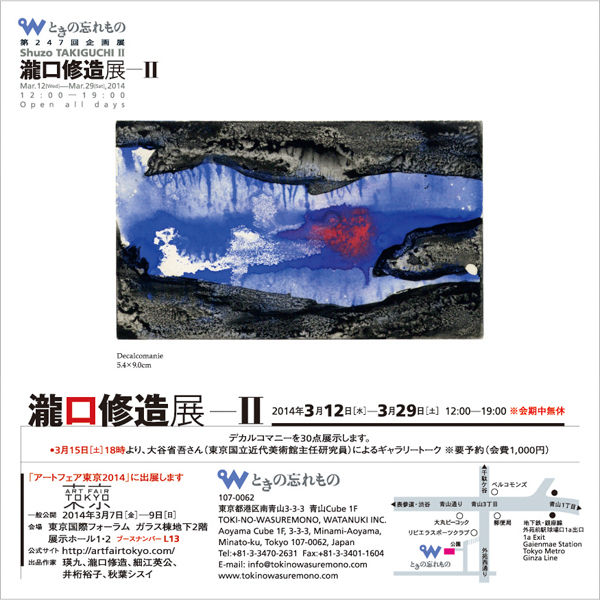
今回は「瀧口修造展 Ⅰ」では展示しなかったデカルコマニー30点をご覧いただきます。
●出品作品を順次ご紹介します。
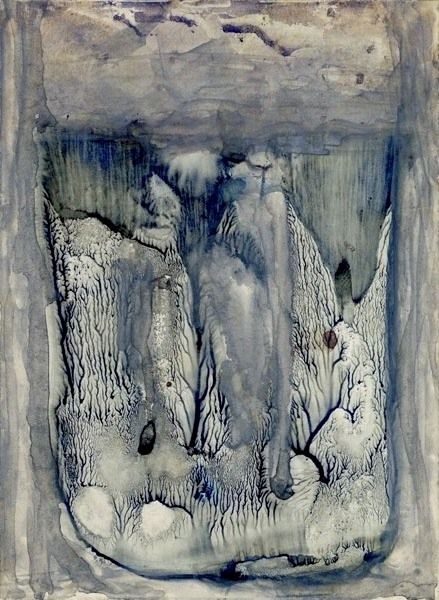 瀧口修造
瀧口修造《Ⅱ-5》
デカルコマニー、紙
※Ⅱ-4と対
Image size: 13.6x9.9cm
Sheet size: 13.6x9.9cm
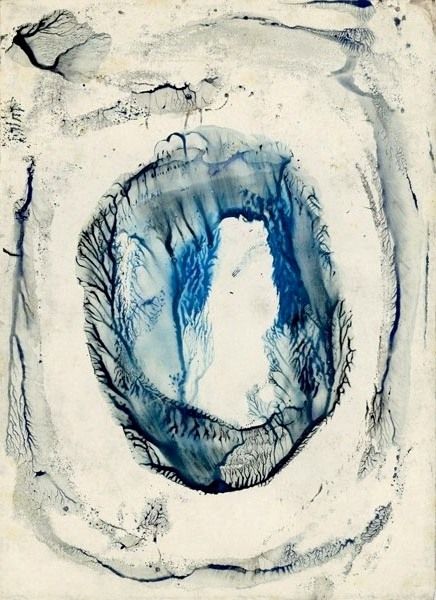 瀧口修造
瀧口修造《Ⅱ-5(裏)》
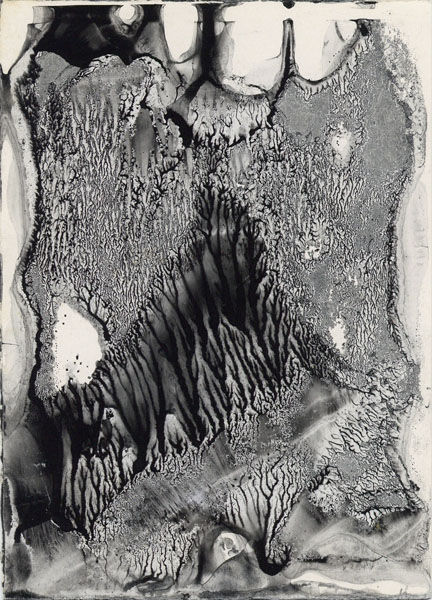 瀧口修造
瀧口修造《Ⅱ-6》
デカルコマニー、紙
Image size: 13.8x9.9cm
Sheet size: 13.8x9.9cm
こちらの作品の見積り請求、在庫確認はこちらから
このブログでは関係する記事やテキストを「瀧口修造の世界」として紹介します。土渕信彦のエッセイ「瀧口修造の箱舟」と合わせてお読みください。
●カタログのご案内
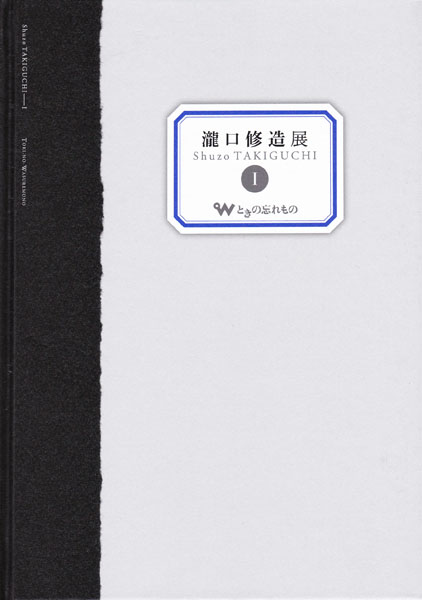 『瀧口修造展 I』図録
2013年
ときの忘れもの 発行
図版:44点
英文併記
21.5x15.2cm
ハードカバー
76ページ
執筆:土渕信彦「瀧口修造―人と作品」
再録:瀧口修造「私も描く」「手が先き、先きが手」
価格:2,100円(税込)
※送料別途250円(お申し込みはコチラへ)
------------------------------------------
●本日のウォーホル語録
「人々は目を閉じたまま愛し合うべきだ。目を閉じて、見ないで……。
―アンディ・ウォーホル」
ときの忘れものでは4月19日~5月6日の会期で「わが友ウォーホル」展を開催しますが、それに向けて、1988年に全国を巡回した『ポップ・アートの神話 アンディ・ウォーホル展』図録から“ウォーホル語録”をご紹介して行きます。
こちらの作品の見積り請求、在庫確認はこちらから
コメント